
Men's Wellness
— Testosterone Replacement Therapy & Longevity
Longevity isn’t just about living longer.
It’s about feeling like yourself while you do.
Most men accept the decline.
They don’t have to.

Energy that isn’t what it was. Weight that’s harder to shift. Reduced stamina and a loss of muscle mass. The sense that things are subtly off, without any particular medical issue flagged. These are the concerns that bring most men to Noumena Medical — and they are often connected to gradual hormonal changes that begin in a man’s late 30s and 40s, sometimes casually referred to as andropause. They deserve a proper look.
Men’s Wellness at Noumena is built around two things: understanding where your health markers and hormones actually stand, and moving them in the right direction.
For men whose testosterone has declined to the point of affecting quality of life, that may mean testosterone replacement therapy (TRT) — assessed properly, prescribed carefully, and monitored over time. For other patients, it means a longevity-led plan that tracks and optimises their bio-markers.
As a member of both the Singapore Men’s Health Society and the American Academy for anti-ageing (A4M), Dr Matthew Tan’s focus on hormonal and metabolic health is supported by ongoing engagement in the field.
Dr Matthew Tan begins with a conversation. From there, he outlines what’s worth investigating and why — and together you decide on the next steps.
Testosterone & TRT
What is actually happening?
Testosterone levels in men decline gradually from the late 30s onward — typically around one to two percent per year. For some men this is clinically insignificant; for others, the cumulative effect over a decade or more produces symptoms that are real, measurable, and quality-of-life affecting.
“Andropause” is a colloquial term sometimes used to describe the same phenomenon — it is widely understood but not a formal medical diagnosis. The clinical term for this condition is Late-Onset Hypogonadism (LOH), also referred to as Androgen Deficiency in the Ageing Male (ADAM). The distinction matters because LOH and ADAM are diagnosable conditions with established clinical criteria, not simply a natural consequence of getting older that must be accepted.

Symptoms of ADAM
The symptoms of Androgen Deficiency in the Ageing Male (ADAM) are often gradual in onset and easy to attribute to other causes. The most commonly reported include:
- Lower sex drive — a gradual reduction in libido that may be mistakenly dismissed as due to stress or life circumstance.
- Erectile dysfunction — difficulty achieving or maintaining erections; this can also be an early indicator of cardiovascular health and is assessed by Dr Matthew Tan in that context.
- Fatigue and low energy — a persistent flatness that sleep does not resolve.
- Diminished muscle mass and the reduced ability to exercise — men notice they are losing strength and finding it harder to build or maintain muscle despite consistent effort.
- Mood changes — irritability, low motivation, a diminished sense of wellbeing.
- Reduced bone density — less visible but clinically important over time.
Accurate diagnosis is the starting point — not assumption.
Not every man with low testosterone will experience all of these. And not every man with these symptoms has low testosterone.
How we assess it
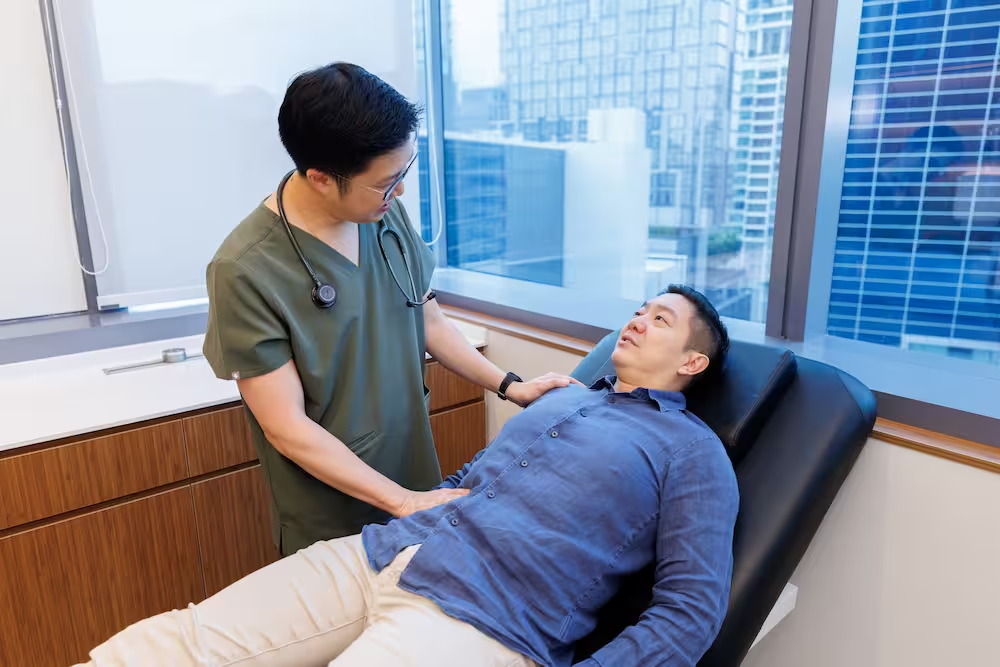
Dr Tan begins with a detailed history and clinical examination, followed by blood tests that measure total and free testosterone alongside other relevant hormones — LH, FSH, oestradiol, prolactin, and where indicated, thyroid function and metabolic markers. The picture matters as much as any single number. A testosterone level read in isolation tells you less than the same number read alongside symptoms, body composition, and the rest of the panel.
Testosterone Replacement Therapy (TRT)
TRT is a medical treatment for clinically confirmed LOH/ ADAM. It is not a lifestyle product, a performance enhancer, or a shortcut. For men who meet the clinical criteria, it can meaningfully restore energy, muscle mass, libido, mood, and overall function.
Treatment requires careful prescribing and ongoing monitoring — haematocrit, PSA, oestradiol, and fertility considerations are all part of the picture. Dr Tan manages TRT long-term, adjusting as your numbers and your response to treatment evolve. The goal is a stable, well-monitored therapeutic level — not a number chased for its own sake.
Where TRT is not appropriate, alternatives exist are discussed during consultation.


Longevity Medicine
Longevity medicine is the discipline of using detailed screening, biomarker tracking, and targeted intervention to influence how a person ages — not in the abstract, but in measurable, year-on-year ways.
For most men, the conversation about longevity begins in the 40s. By that point there is typically enough history — family, metabolic, cardiovascular — to build a meaningful baseline, and enough runway to make interventions matter.
Longevity medicine is centred around the Geroscience Hypothesis which posits that there are 4 evolutionarily conserved biochemical pathways that regulate aging – MAPK, mTOR, IGF and NAD+. The level to which these pathways are regulated (different in each patient) manifests in 12 Hallmarks of Aging:
- Genomic instability
- Telomere attrition
- Epigenetic alterations
- Loss of proteostasis
- Disabled macrophagy
- Deregulated nutrient sensing
- Mitochondrial dysfunction
- Cellular senescence
- Stem cell exhaustion
- Altered intracellular communication
- Chronic inflammation
- Dysbiosis
Because each person ages differently, Dr Tan will target the aspects of your aging that needs to be modulated and craft a tailor-made intervention rather than running a generic health screen.
As a member of the American Academy of Anti-Aging Medicine, Dr Tan brings the latest developments in geroscience and longevity medicine directly to his clinical practice.

Prostate Health
The prostate is the organ most men think about least — until they have to. From the late 40s onward, three things become increasingly common: the prostate enlarges, it occasionally becomes inflamed, and the risk of prostate cancer rises. None of these are inevitable problems. All of them benefit from structured assessment rather than reactive treatment.
Prostate Cancer Screening
Prostate cancer is one of the most common cancers in men and one of the most variable in how it behaves. Some forms are slow-growing and never cause harm; others are aggressive and benefit substantially from early detection. The role of screening is to distinguish between them — and to do so without subjecting men to investigation they don’t need.
Screening at Noumena Medical begins with an honest conversation about individual risk: age, family history, ethnicity, and your own preferences about what you want to know and when. The starting point is a PSA blood test, interpreted alongside a clinical examination. Dr Matthew Tan discusses what your result means in context — what is reassuring, what is borderline, and what warrants further investigation. Where the picture is unclear, additional markers or multiparametric MRI may be recommended before considering biopsy. Modern prostate cancer pathways are designed to avoid unnecessary biopsies, and we follow that principle.
Benign Prostatic Hyperplasia (BPH)
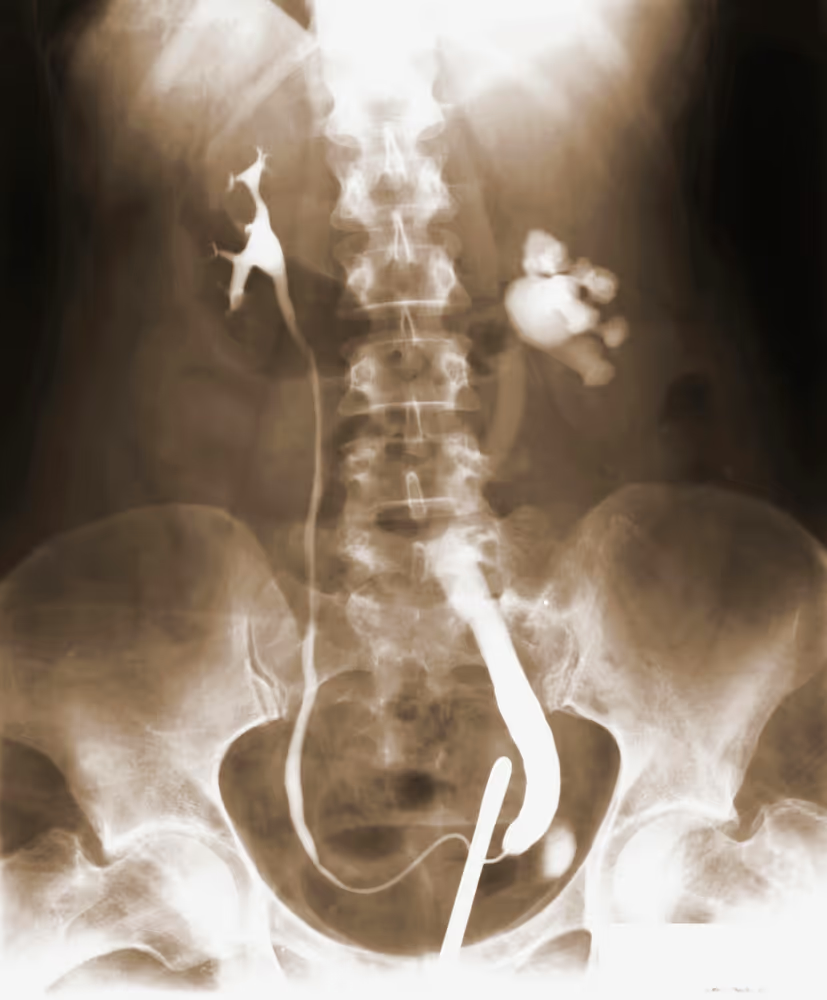
Benign enlargement of the prostate is part of normal ageing for most men. By the 50s and 60s, the majority have some degree of it; for many, it produces symptoms — a weaker stream, hesitancy, getting up at night to urinate, incomplete emptying, occasional urgency. These symptoms are treatable. For mild cases, lifestyle adjustments and watchful waiting may be appropriate. For more troublesome symptoms, well-established medications can substantially improve flow and reduce nighttime waking. Dr Tan discusses the trade-offs of each, including the sexual side effects some men experience. Where medical management is not sufficient, procedural options exist and we coordinate referral to a specialist colleague where appropriate.
Prostatitis
Prostatitis — inflammation of the prostate — is more common than most men realise. Acute bacterial prostatitis is unmistakable and needs prompt antibiotic treatment. Chronic forms are more subtle: pelvic discomfort, urinary symptoms, sometimes pain on ejaculation, often with no clear infection on testing. These chronic cases are frequently dismissed. Dr Tan takes them seriously, assesses them properly, and manages them with the combination of approaches the condition actually responds to.
When to Start
For most men, the prostate conversation begins in the late 40s. Men with a family history of prostate cancer, men of African or Caribbean ancestry, or men with symptoms at any age should start sooner. The first consultation is straightforward: history, examination, a baseline PSA, and a plan.
Frequently Asked Questions
What's the difference between a health screening and longevity medicine?
A standard health screening is designed to detect disease that is already present. Longevity medicine goes further — it uses detailed biomarker assessment to identify where your health is heading, not just where it is now. The aim is to intervene earlier, before problems become diagnoses.
Is longevity assessment just a very expensive health screen?
Longevity assessment at Noumena Medical is framed around the evidence based Geroscience Hypothesis. Therefore, tests in a longevity assessment go beyond most standard health screenings to specific longevity tests that are directed at the 4 evolutionarily conserved pathways and 12 hallmarks of ageing.
I already have a GP and get an annual check-up. What would Noumena Medical add?
An annual check-up is not designed to catch gradual decline. It measures whether values are within a broad normal range — which most men in their 40s still are, even when their trajectory is worsening. At Noumena Medical, we look at your bio-chemistry numbers and what they mean for your cardiovascular, hormonal, and metabolic health in combination — not in isolation.
How often would I need to come in?
After the initial consultation and baseline assessment, follow-up frequency depends on what we find and what we're managing. Some patients are reviewed every three to four months; others less often. The plan is built around your numbers and your goals, not a fixed schedule.
Is longevity medicine just for older men, or should I start earlier?
The earlier you start, the more useful the data becomes — because you build a baseline before problems are visible. Most of the conditions longevity work is designed to prevent (cardiovascular disease, insulin resistance, hormonal decline) develop slowly over years by modulating the 4 pathways driving ageing and the 12 hallmarks of ageing. Men in their late 30s and 40s are the patients who benefit most from starting now.
What does a first consultation involve?
An extended consultation covering your full medical and family history, current symptoms and concerns, and a review of any previous investigations. From there we agree on the baseline assessment that makes sense for you — which may include blood work, cardiovascular markers, hormonal panels, body composition, and other investigations depending on your history and goals.
What is TRT, and who is it for?
TRT is a medical treatment for men with clinically confirmed testosterone deficiency — a condition called Late Onset Hypogonadism or Androgen Deficiency in the Aging Male (ADAM). It is also colloquially referred to sometimes as ‘andropause’. TRT is not a lifestyle supplement or a way to push testosterone above its natural range.
What are the symptoms of low testosterone?
The common ones are fatigue, reduced libido, difficulty building or maintaining muscle, mood changes, reduced drive, and sometimes erectile difficulty. None of these is specific to low testosterone — they overlap with thyroid dysfunction, poor sleep, depression, and metabolic disease. The workup at Noumena is designed to find the actual cause, not to assume testosterone is the answer before looking at the whole picture.
Does TRT affect fertility?
Yes — and this is one of the most important conversations to have before starting. TRT suppresses sperm production, often substantially, within three to six months. Recovery after stopping typically takes six to twelve months and is not guaranteed. If there is any possibility you want children in the future, this conversation happens first. Alternatives that raise testosterone without shutting down sperm production exist, and we discuss them where they apply.
Is TRT safe for the heart?
For men with confirmed deficiency who are properly assessed and monitored, the best available evidence is reassuring. The TRAVERSE trial — a randomised controlled trial of over 5,200 men published in the New England Journal of Medicine in 2023 — found no increase in heart attack or stroke risk. The trial did identify higher rates of atrial fibrillation and pulmonary embolism in the TRT group, which is why patient selection and ongoing monitoring matter.
What monitoring does TRT require?
Regular blood tests throughout treatment — not optional. We check testosterone, haematocrit, PSA, and oestradiol. Haematocrit rises on TRT and needs watching because elevated levels increase clotting risk. PSA is monitored because testosterone stimulates prostate tissue. Oestradiol is checked because testosterone converts to oestrogen in the body — if it rises too high, men can experience breast tissue sensitivity, water retention, and mood changes.